
Guide
How to run 1:1 meetings
at an event
Meeting length, booking window, tables, no-shows and how to tell afterwards whether it worked.
How do you run 1:1 meetings at an event?
Open meeting booking one to two weeks before the event, give attendees fixed slots of 15–20 minutes and give every meeting a numbered table. Ask each attendee what they offer and what they seek, so that people find the right contacts without reading the whole attendee list.
1. Decide who should meet whom
Start from the reason people come. In an open networking event anyone can meet anyone. In a two-sided event the meetings are between two groups: sellers and buyers, employers and job seekers, start-ups and investors. In a two-sided event each side should see only the other side, which keeps the list short and the requests relevant.
Write the answer down in one sentence, for example "suppliers meet buyers from retail chains". It decides the profile questions, the number of slots and the size of the meeting area.
2. Ask what people offer and what they seek
Matching works on two questions, "what do you offer?" and "what are you looking for?". Give five to ten ready options for each and let attendees choose several. Ready options can be matched with each other, and free text cannot. Add one or two extra questions only if the answer changes whom a person should meet, such as the industry or the region.
- Use the attendees' own words for the options, not your organisation's internal terms
- Make the questions mandatory, because a profile without answers gets no suggestions
- Ask for a photo and a job title, because they make people answer meeting requests
3. Choose the length and number of meeting slots
Fifteen to twenty minutes is enough for an introduction and for agreeing on the next step. Longer slots halve the number of meetings without making them better. Leave about five minutes between slots for changing tables.
A two-hour meeting block holds six meetings of 15 minutes or four meetings of 20 minutes for each attendee. Put the block where the programme has nothing people would hate to miss, because a block that competes with the keynote stays empty.
4. Open booking early and remind people
Open the booking one to two weeks before the event, when most attendees have registered. If you open earlier the list is half empty, and if you open later calendars are full. Tell attendees the opening day in advance.
- Send a message on the day booking opens, with a direct link
- Remind those who have not booked anything three to four days before the event
- Send everyone their schedule the day before
- Tell people whether walk-in meetings are possible on the day
5. Set up the meeting area
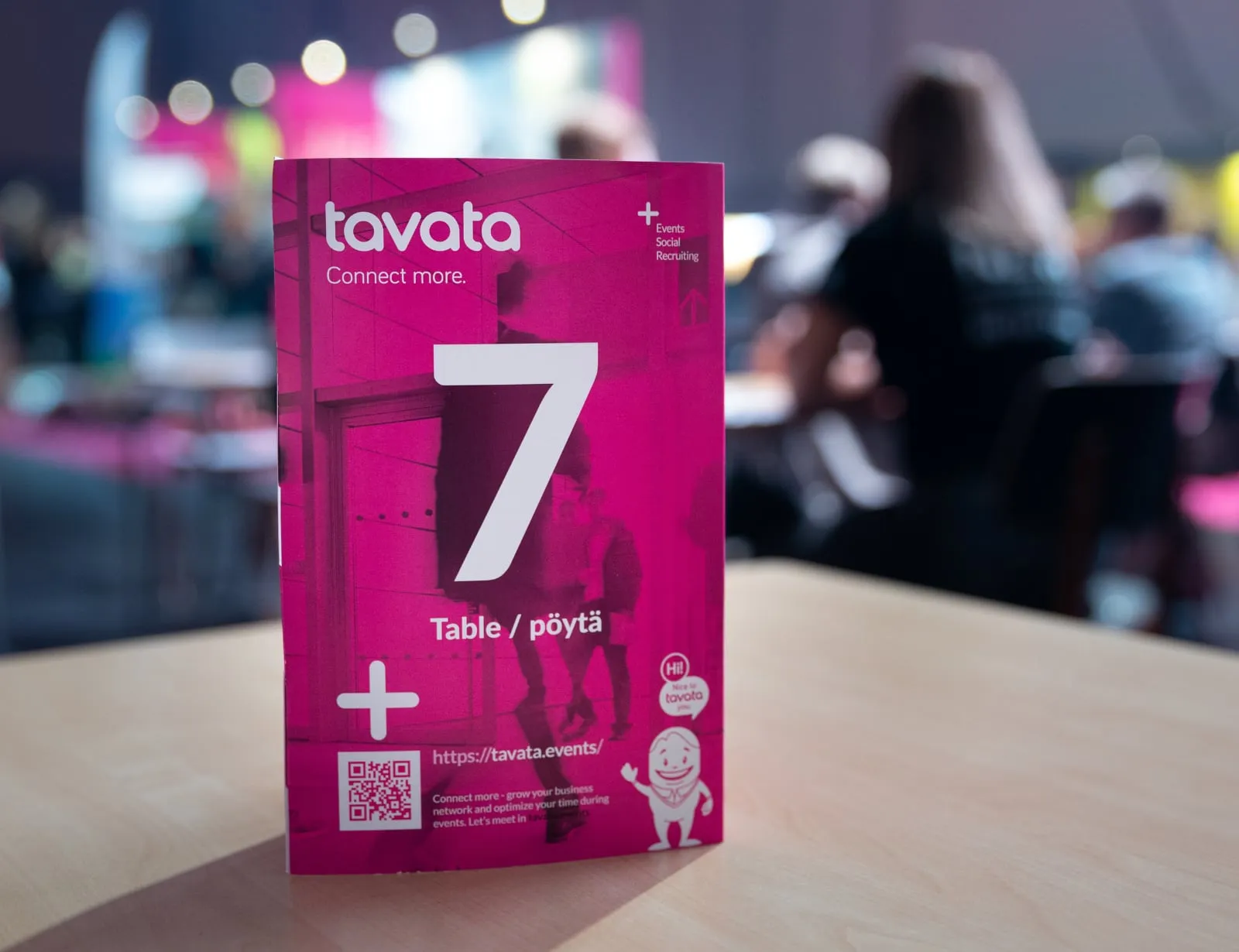
Give every meeting a numbered table, so that two people who have never met find each other without phoning. Count the tables from the busiest slot. If 200 attendees take part and half of them are in a meeting at the same time, you need 50 tables.
Put the area close to the coffee and away from the stage sound. Use large table numbers and a sign at the entrance, and place one person at the area to help those who are lost.
6. Avoid no-shows
A no-show wastes two people's time. Most no-shows come from forgotten meetings and from programme changes, so the cure is information.
- Each attendee's meetings should be in one schedule with the programme sessions they chose
- A cancelled meeting should free the slot, so that someone else can book it
- Ask people to cancel in the app when plans change
- Keep the meeting block clear of sessions that run over
7. Include remote participants
In a hybrid event a buyer or an employer who cannot travel can hold the same meetings by video. Decide when you set up the event whether meetings are face to face, by video or both, and tell attendees how a video meeting starts. Test a video meeting once with the venue's network before the event.
8. Measure what happened
Three figures tell whether the meetings worked: the number of meetings booked, the share of attendees who had at least one meeting, and what attendees say in the feedback about the meetings they had. Report the figures to your partners and use them when you plan the next event.
Rules of thumb
Meeting length
15–20 minutes, with about five minutes between slots.
Booking opens
One to two weeks before the event.
Tables
One table for every two people who are in a meeting during the busiest slot.
Reminders
On the opening day, three to four days before and the day before.
Questions about 1:1 meetings
How long should a 1:1 meeting at an event be?
Fifteen to twenty minutes. It is enough for an introduction and for agreeing on the next step, and it lets each attendee have four to six meetings in a two-hour block.
When should meeting booking open?
One to two weeks before the event, when most attendees have registered.
How many meeting tables do we need?
Count from the busiest slot. If half of your 200 attendees are in a meeting at the same time, that is 100 people and 50 tables.
How do we reduce no-shows?
Show each attendee's meetings in one schedule with the programme, remind people the day before and make cancelling easy, so that a freed slot can be booked again.
What tool do we need for meeting booking?
A tool in which attendees see each other, get suggestions and book free slots themselves, and which gives each meeting a table number. Tavata does this in its app and in the browser, where attendees have nothing to install.
Read next
Planning meetings for your event?
Send the date and the number of attendees, and we will show you how meeting booking would work at your event and what it costs. We reply in your language.